
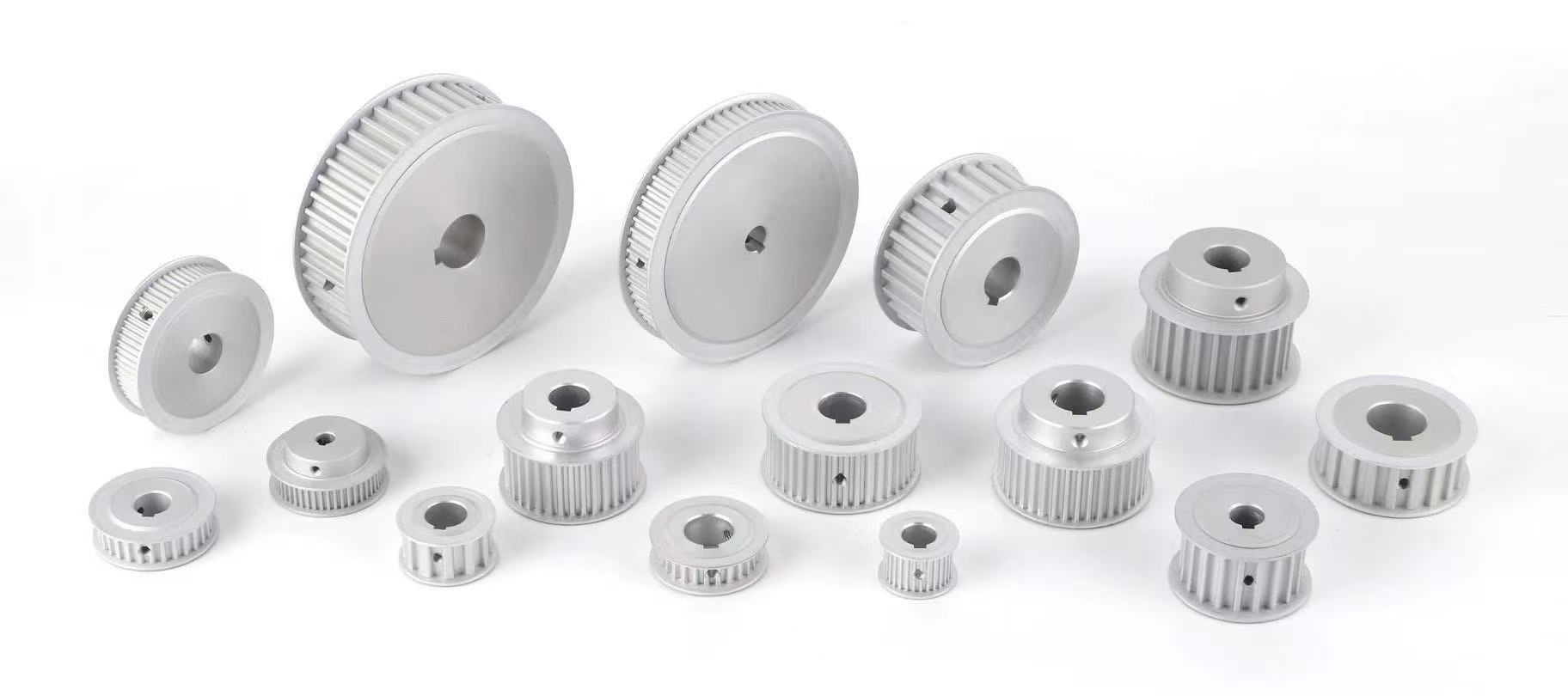
What is a Pulleys ? and howtochoose them
What Is a Pulley? And How to Choose the Right Pulley
What Is a Pulley?
A pulley is a mechanical component used to transfer motion and power through a belt, rope, or cable. It is widely used in industrial machinery, automation equipment, agricultural machines, conveyor systems, fitness equipment, and many other mechanical transmission applications.
A pulley usually consists of a wheel with grooves on its outer surface. The grooves help guide and hold the belt or rope during operation, ensuring smooth and efficient transmission.
Common pulley materials include:
- Aluminum
- Steel
- Stainless Steel
- Cast Iron
- Plastic
Pulleys play an important role in:
- Reducing mechanical load
- Changing transmission direction
- Increasing transmission efficiency
- Controlling speed and torque
Common Types of Pulleys
1. Timing Pulley
Timing pulleys are used with timing belts for precise synchronous transmission without slipping. They are commonly used in CNC machines, automation systems, and robotics.
2. V-Belt Pulley
V-belt pulleys are designed with V-shaped grooves and are widely used in industrial motors, pumps, compressors, and agricultural machinery.
3. Flat Belt Pulley
Flat belt pulleys are suitable for light-duty transmission systems and high-speed applications.
4. Idler Pulley
Idler pulleys help maintain belt tension and guide belt movement in transmission systems.
5. Multi-Groove Pulley
These pulleys contain multiple grooves for better load distribution and higher transmission efficiency.
How to Choose the Right Pulley
Choosing the correct pulley is important for transmission efficiency, machine performance, and service life. Here are the key factors to consider:
1. Determine the Application
First, identify where the pulley will be used:
- Industrial machinery
- Conveyor systems
- Agricultural equipment
- Automation machines
- Fitness equipment
- Automotive systems
Different applications require different pulley designs and materials.
2. Select the Correct Pulley Type
Choose the pulley type based on the transmission system:
- Timing pulley → precise synchronization
- V-belt pulley → high power transmission
- Flat pulley → lightweight applications
- Idler pulley → belt tension adjustment
3. Choose the Proper Material
The material affects durability, weight, and corrosion resistance.
| Material | Advantages | Applications |
|---|---|---|
| Aluminum | Lightweight, corrosion resistant | Automation equipment |
| Steel | High strength | Heavy machinery |
| Stainless Steel | Rust resistant | Food & medical equipment |
| Cast Iron | Durable and vibration resistant | Industrial transmission |
4. Check Pulley Size
Important dimensions include:
- Outer diameter
- Bore size
- Groove size
- Number of grooves
- Width
The pulley must match the shaft and belt specifications correctly.
5. Consider Load and Speed
High-speed or heavy-load applications require stronger materials and more precise machining.
Factors include:
- Rotational speed (RPM)
- Torque
- Belt tension
- Working environment
6. Evaluate Surface Treatment
Surface finishing improves durability and corrosion resistance.
Common treatments:
- Anodizing
- Zinc plating
- Powder coating
- Black oxide
- Polishing
7. Customization Requirements
Many industrial projects require customized pulleys.
Custom options include:
- Custom bore sizes
- Keyways
- Surface finishes
- Special materials
- OEM logo engraving
Why High-Quality Pulleys Matter
Using high-quality pulleys can provide:
- Better transmission efficiency
- Longer service life
- Reduced maintenance costs
- Lower machine vibration
- More stable operation
Precision CNC machining and strict quality control are important for reliable pulley performance.
Conclusion
Pulleys are essential components in modern mechanical transmission systems. Choosing the right pulley depends on application requirements, transmission type, material, size, load capacity, and operating environment.
Whether for industrial automation, agricultural machinery, conveyor systems, or custom mechanical equipment, selecting the proper pulley helps improve efficiency, reliability, and overall machine performance.